The Real ROI of Private Party Vehicle Acquisition (vs Auctions)
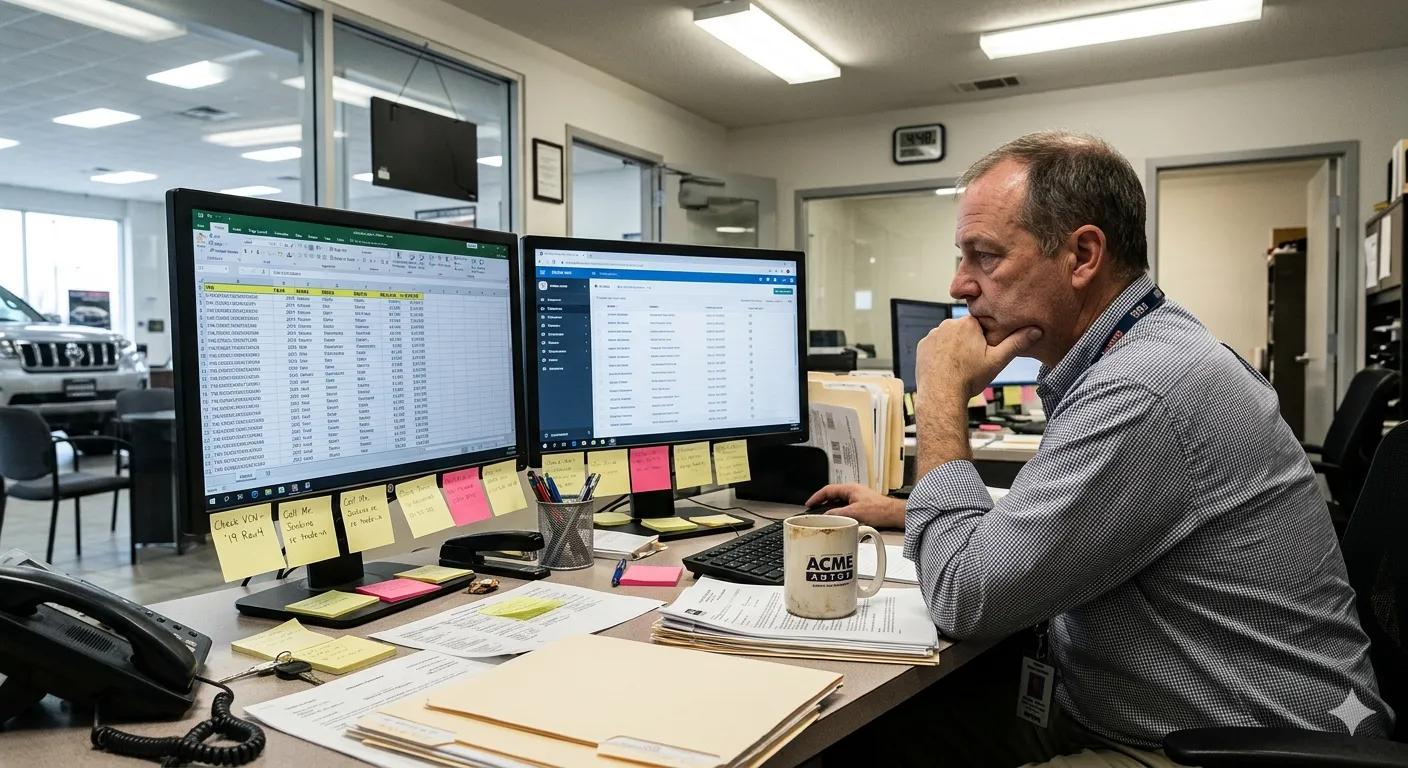
Every dealer knows auctions are expensive. The buy fees, transport costs, and reconditioning expenses eat into margins before you've even listed the vehicle on your lot. But most dealers continue to rely on auctions for the majority of their inventory because it's what they know—it's predictable, it's structured, and it's familiar.
What if there was a sourcing channel that delivered 3–5x better front-end gross, faster turn times, and lower total acquisition costs? That channel exists, and it's called private-party acquisition. Let's break down the real numbers.
The True Cost of Buying at Auction
When dealers think about auction costs, they usually think about the hammer price and the buy fee. But the true cost of an auction purchase goes much deeper:
Direct Auction Costs
- Buy fee: $300–$700 per vehicle (varies by auction and price bracket)
- Transport: $200–$800 depending on distance (averaging $400 for regional transport)
- Auction membership/registration: $100–$500/year
- Floor plan interest: Accumulates from the moment you buy until the vehicle sells
Hidden Auction Costs
- Reconditioning: Auction vehicles average $1,200–$1,800 in recon costs. These are vehicles that have been through multiple hands, sat on dealer lots, and were sent to auction because they didn't sell at retail. They typically need more work than private-party vehicles.
- Arbitration risk: Post-sale mechanical issues that the auction's limited guarantee doesn't cover
- Time cost: Attending auctions, previewing vehicles, arranging transport—the labor hours add up
- Opportunity cost: Money tied up in auction purchases (and sitting in transit/recon) isn't available for other inventory
When you add it all up, the total cost above hammer price typically runs $1,200–$2,000 per vehicle at auction. On a $15,000 vehicle, that's an 8–13% surcharge before you've invested a dollar in making it retail-ready.
Private Party Acquisition: The Numbers
Now let's look at the same analysis for private-party purchases:
Direct Costs
- Acquisition tool: $775–$1,250/month (backlist.io pricing), amortized across all vehicles sourced
- Transport: Often $0—many private-party purchases are local and the seller delivers or you pick up
- Buy fee: $0—there's no middleman taking a cut
Reconditioning Advantage
Private-party vehicles are typically in better condition than auction vehicles. Why? Because they're coming directly from the person who drove them. There's no adverse selection bias—the seller isn't a dealer who already decided the vehicle wasn't worth retailing. Average recon costs on private-party acquisitions run $500–$900, roughly half the auction average.
The Gross Profit Difference
Here's where it gets compelling. Industry data consistently shows:
- Average front-end gross on auction purchases: $1,337 (NADA data)
- Average front-end gross on private-party purchases: $3,500–$7,000
Why such a large difference? Several factors compound in your favor:
- No buy fee means your cost basis is lower from the start
- Better negotiating position: Private sellers are less sophisticated than auction houses. They're often motivated by convenience and speed, not maximizing every dollar.
- Lower recon costs mean more of the spread between your purchase price and retail price becomes profit
- Unique inventory: Private-party vehicles aren't available to every dealer in your market. Auction vehicles are. Unique inventory commands better retail prices because you're not competing with five other dealers who bought the same car at the same auction.
Turn Time: Speed Matters for Profitability
Turn time directly impacts your inventory ROI. Every day a vehicle sits on your lot costs money—floor plan interest, lot space, depreciation, and opportunity cost.
- Average turn time for auction vehicles: 43 days
- Average turn time for private-party vehicles: 31 days
Private-party vehicles turn 28% faster on average. This is partly because they tend to be in better condition (less recon time before they're retail-ready) and partly because the unique sourcing story is a genuine retail selling point. Customers increasingly prefer buying from dealers who source directly from private parties—it signals quality and care.
ROI Calculation: 5 Cars Per Month
Let's calculate the annual ROI difference for a dealership sourcing 5 vehicles per month—a realistic number for an active independent dealer.
Scenario A: 5 Vehicles/Month via Auction
| Metric | Per Vehicle | Monthly (5 cars) | Annual (60 cars) |
|---|---|---|---|
| Average front-end gross | $1,337 | $6,685 | $80,220 |
| Buy fee | -$500 | -$2,500 | -$30,000 |
| Transport | -$400 | -$2,000 | -$24,000 |
| Additional recon (above baseline) | -$600 | -$3,000 | -$36,000 |
| Net profit from sourcing | -$163 | -$815 | -$9,780 |
Read that again: after accounting for all the costs above the hammer price, the average auction purchase generates negative net sourcing profit. Dealers make it work by volume, back-end products, and the occasional home run—but the sourcing channel itself is barely breaking even for most independent operators.
Scenario B: 5 Vehicles/Month via Private Party (using backlist.io)
| Metric | Per Vehicle | Monthly (5 cars) | Annual (60 cars) |
|---|---|---|---|
| Average front-end gross | $5,000 | $25,000 | $300,000 |
| Buy fee | $0 | $0 | $0 |
| Transport | -$50 | -$250 | -$3,000 |
| backlist.io subscription | — | -$775 | -$9,300 |
| Net profit from sourcing | — | $24,100 | $289,200 |
The Difference
Switching 5 vehicles per month from auction to private-party sourcing represents a potential improvement of nearly $299,000 in annual net sourcing profit. Even if we discount that by 50% to account for real-world variability—deals that fall through, occasional lower margins, months where inventory is tight—that's still nearly $150,000 in additional annual profit.
And this is just for 5 vehicles per month. Dealers sourcing 10–15 private-party vehicles monthly see proportionally larger returns.
Why Don't More Dealers Do This?
If the math is so clear, why do most dealers still rely heavily on auctions? A few reasons:
- Habit and familiarity: Auctions are what dealers know. The process is structured and predictable, even if the economics aren't great.
- Scale concerns: Manually sourcing from private sellers is time-intensive. Without tools, it's hard to consistently find 5+ vehicles per month.
- Perceived risk: Some dealers worry about title issues, undisclosed damage, or difficult sellers. In practice, these risks are manageable with proper processes.
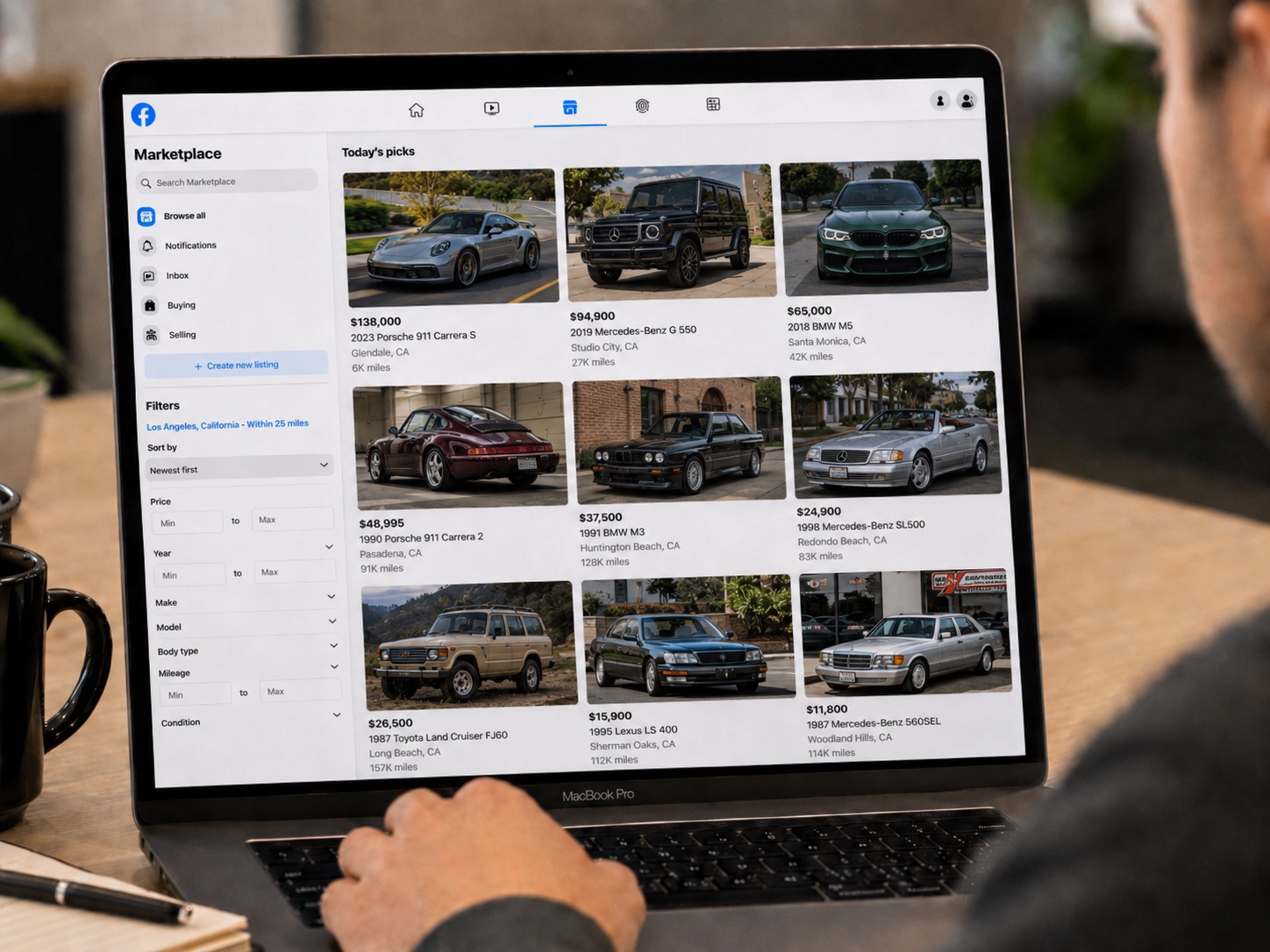
- Lack of systems: Until recently, there wasn't an efficient way to monitor multiple marketplaces at scale. Dealers had to manually browse Craigslist, Facebook Marketplace, and other platforms—a time-consuming process that didn't scale.
This is exactly the problem backlist.io solves. By automating the monitoring and filtering of private-party listings across Facebook Marketplace, Craigslist, Cars.com, and Autotrader, backlist.io makes it possible to source private-party vehicles at the same scale and consistency as buying at auction—but with dramatically better economics.
Getting Started with Private Party Acquisition
You don't need to abandon auctions overnight. The smartest approach is to start supplementing your auction buying with private-party acquisitions and let the results speak for themselves:
- Start with 2–3 vehicles per month from private-party sources
- Track your metrics: cost basis, recon costs, front-end gross, and turn time
- Compare honestly to your auction purchases over the same period
- Scale what works: As you build confidence and processes, shift more of your sourcing to private-party channels
Most dealers who try this approach find that within 2–3 months, private-party acquisitions are outperforming their auction purchases on every metric that matters.
See the ROI for Yourself
backlist.io helps dealers source private-party vehicles at scale with real-time marketplace monitoring, AI-powered filtering, and instant alerts. Starting at $775/month with no setup fee and no contract, the tool typically pays for itself with a single acquisition.
See how we compare to VettX in our head-to-head comparison, or learn how to source vehicles from Facebook Marketplace like a pro.
Book a free demo and we'll show you what's available in your market right now—and help you calculate the ROI for your specific operation.
Ready to see real-time listings?
Book a free demo and we'll show you live private-party listings in your market.