Facebook Marketplace scraper for car dealers: what actually works in 2026
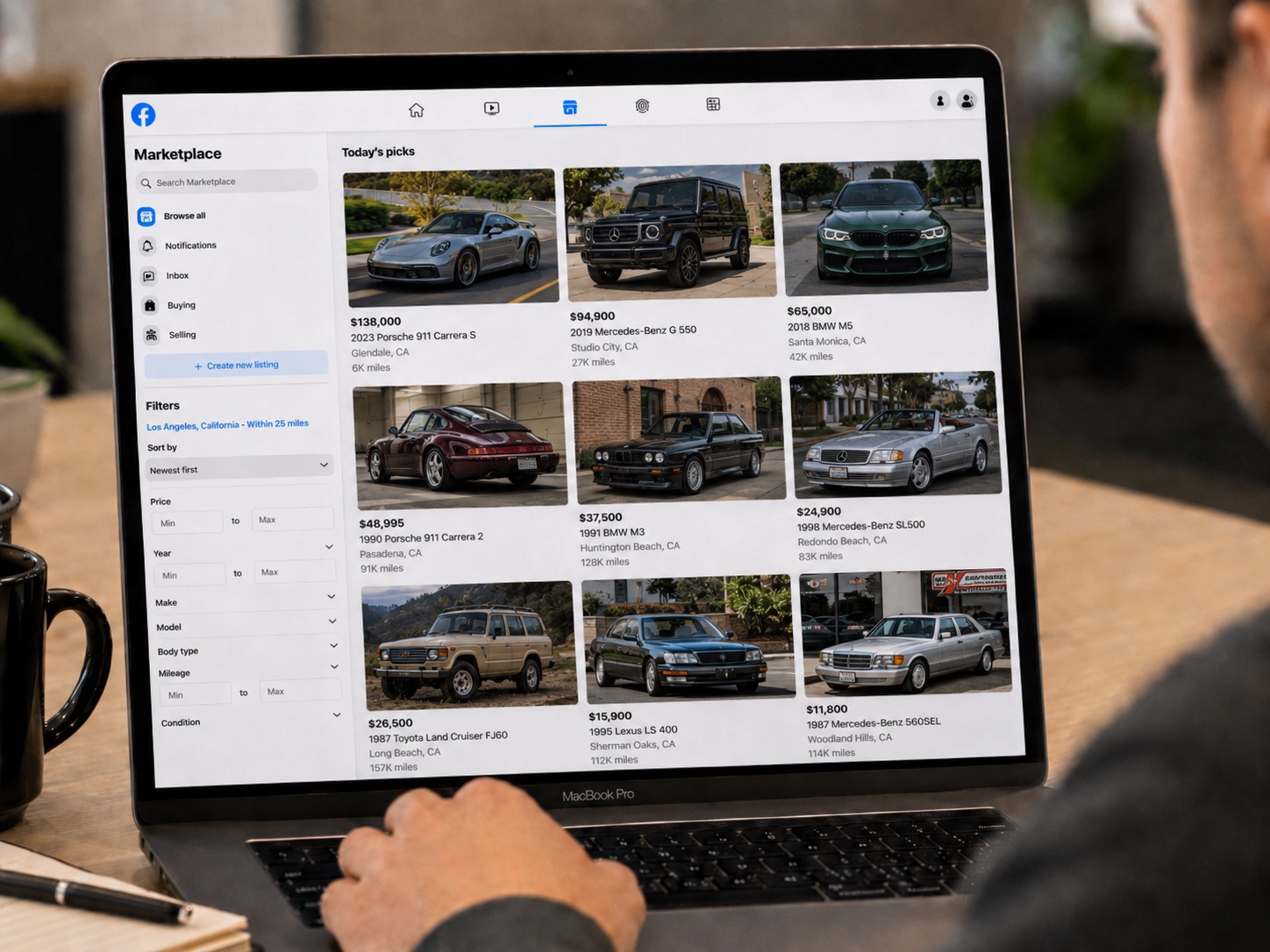
"Facebook Marketplace scraper" is one of the most-searched phrases in used-car acquisition, and it is easy to see why. Marketplace is where most private sellers list first, the search UI is built for a shopper looking at one car, and a buyer trying to watch fifty models across a 100-mile radius runs out of tabs before lunch. So someone on the team asks whether a scraper could just pull it all into a spreadsheet.
This post is about what that road actually looks like, why the do-it-yourself version fails, and what a purpose-built sourcing feed does differently. It is not a how-to for automating a Facebook account; we do not recommend that, and dealers who have tried it tend to say the same.
Why dealers want it
Three reasons come up in almost every conversation:
- Speed. The first buyer to call a well-priced private listing usually gets the car. Refreshing search pages by hand means you are always minutes or hours behind whoever automated it.
- Coverage. A buyer can realistically watch a handful of saved searches. The cars that make the month are often in a model or a town nobody was watching.
- Pricing. Marketplace shows an asking price and nothing else. Every car has to be re-keyed into a book to know whether it is a deal, and by then the good ones have moved.
All three are legitimate. The mistake is assuming a scraper is the tool that solves them. Our dealer's guide to Facebook Marketplace covers the buying side; this one is about the plumbing.
Why DIY scrapers fail
Accounts get banned
Marketplace is only browsable by a logged-in Facebook account, and Facebook is very good at spotting an account that behaves like a script: page loads at machine cadence, the same searches on a loop, no normal activity in between. The usual result is a checkpoint, then a lock, then a ban, and the account that gets burned is often a real employee's personal profile or the store's page. Rebuilding that is expensive in ways that do not show on the software invoice, and any "workaround" you find online is a race you will eventually lose. We do not recommend automating a personal account, and a vendor who tells you to should be a red flag.
They miss most listings
Even a scraper that survives sees a narrow slice. Marketplace's results are personalised and paginated; a script pulling a search page gets what that account, in that location, was shown, and rarely more than the first few dozen results. Listings that appear between polls, listings outside the exact keyword, and listings the ranking buried never surface. A typical DIY setup ends up watching a few models in one radius, which is the same thing the buyer was doing by hand, only with a ban risk attached.
The data is raw
What comes back is a title, an asking price, a city and some photos. No dedupe, so the same car cross-posted from Craigslist and OfferUp shows up three times. No dealer detection, so half the "private" rows are curbstoners and small lots (our guide to spotting dealer listings on Marketplace shows how common that is). No trim or option detection, no title-status read, and no price. The buyer still has to open every row and book every car.
What a real sourcing feed does
A purpose-built feed is not a faster scraper. It is a different product that happens to start with the same public listings.
- Collection at scale, without your accounts. The vendor operates its own infrastructure across many markets and sources, so nothing runs on your team's profiles and coverage is not limited to what one account can see.
- Dedupe across sources. The same car posted on Facebook, Craigslist, Autotrader, Cars.com, eBay and OfferUp collapses to one record with the earliest post time and every link.
- Dealer-vs-private classification. A classifier reads the photos, the description and the seller's posting history to separate true private sellers from disguised dealers, so the feed is buyable, not just big.
- Pricing against Manheim MMR. Each listing gets a predicted wholesale value, a predicted retail price and a deal grade. The buyer sorts by margin, not by asking price.
- Alerts, then a CRM. Matching cars push to the buyer's phone within minutes, and the seller conversation, phone detection and follow-up live in one pipeline the manager can see.
How backlist.io does it
backlist.io runs collection across Facebook Marketplace, Craigslist, Autotrader, Cars.com, eBay and OfferUp on our own infrastructure — nothing touches your team's Facebook accounts. New listings are deduped, classified private-vs-dealer, and priced against Manheim MMR within minutes of going live, then pushed by SMS, email and the iOS app to whichever buyer's filters they match. The dashboard shows the margin, the deal grade, the seller's phone when it can be detected, and the full conversation history, so a buying desk works one feed instead of six tabs.
Pricing is published and month-to-month: Starter is $775/mo for Facebook Marketplace, Craigslist, Autotrader and Cars.com; Professional is $1,450/mo and adds eBay and OfferUp, deal grades, SMS alerts and seller outreach. No contract.
Buying a feed instead of building one
If you are evaluating vendors, the questions that separate a feed from a scraper with a UI are the ones about the plumbing: whose accounts does the collection run on, how are duplicates and dealer listings handled, how many minutes from post to alert, and is the price anchored to MMR. We put those side by side with the other tools dealers ask about in backlist.io vs VETTX, backlist.io vs Swoopa and the 2026 acquisition-software roundup.
Or skip the reading and book a demo: we will pull live private-party listings in your radius, priced against MMR, and you can judge the feed on your own market.
Ready to see real-time listings?
Book a free demo and we'll show you live private-party listings in your market.